by Susie Burdett
Ok, so that sounds like some sort of thesis title and I really will try not to waffle too much with this, but let me explain a few things before I get going. I am currently writing (or should I say failing to write) a dissertation on the independence of Kosovo, and this introduced me to the idea of R2P.
R2P stands for Right to Protect, and is a set of principles (primarily in international relations and politics) that sees sovereignty not as a right but as a responsibility. I will explain the main principles shortly. I have been reminded about R2P by an article by the journal Foreign Policy about women in Afghanistan (discussing this report) and how the planned withdrawal of US involvement will end what little progress has been made here since the invasion. This article made me extremely angry. Read it. You'll see why. Though I fear that it may make me unable to write a clear blog!
I will now admit to some cheating. The following three bullet points have been lifted from Wikipedia(apologies, I know that this isn't always the most reliable source, but what it says does fall in line with what I have read about it...).
R2P can be thought of as having 3 main components:
1. A State has a responsibility to protect its population from genocide, war crimes, crimes against humanity and ethnic cleansing (mass atrocities).
2. If the State is unable to protect its population on its own, the international community has a responsibility to assist the state by building its capacity. This can mean building early-warning capabilities, mediating conflicts between political parties, strengthening the security sector, mobilizing standby forces, and many other actions.
3. If a State is manifestly failing to protect its citizens from mass atrocities and peaceful measures are not working, the international community has the responsibility to intervene at first diplomatically, then more coercively, and as a last resort, with military force.[1]
According to the The Wall Street Journal, the US, along with many other UN countries, has supported the doctrine known as the Right to Protect. If this is the case, their own actions tell another story.
Whilst I am no advocate for military intervention, and certainly not the wars in Afghanistan and Iraq, I do believe that if our governments, in their so called wisdom, choose to invade another country in the name of international security and use the excuse that they are doing so to improve the lives of the affected population, and then go on to use images that promote this idea (such as George Bush's use of images of women and girls going to school to "prove" that they have made a positive impression on the said invaded countries), they should take the responsibility to promote the policies, the structures and the mechanisms by which these war torn countries can strengthen the progress made and develop it further!
And yet the article from Foreign Policy (as well as numerous other articles I'm not going to even bother listing) highlights how little progress has actually been made, how the US, UK and their allies have failed to ensure the safety and security of Afghanistan's women, and have thus failed the whole population. The US (and their allies, I am not going to lay all the blame on one countries shoulders) blindness to continuing gender discrimination, violence and the violations of human rights in Afghanistan (and other countries) just highlights how the rhetoric spoken, and the policies pursued so frequently don't match up.
Surely if the UN members pursue the implementation of the norm of R2P and make it law, the UN members should pursue strategies that actually reflect it? Surely the member countries are therefore obliged to pursue the issue of gender discrimination in order to successfully implement the norm?
Surely we have enough evidence to show that unless gender discrimination is addressed and remedied then no state will protect it's population, nor be able to protect the population of another? Gender discrimination is so much more than an issue that affects women - it affects everybody.
Showing posts with label Afghanistan. Show all posts
Showing posts with label Afghanistan. Show all posts
Tuesday, 18 May 2010

Friday, 5 June 2009
Afghan Women: Continuity or Change?
by Christopher Bowles
The U.S. and N.A.T.O. led invasion of Afghanistan in October 2001 was hailed for attacking, not only the Taliban’s terrorist capabilities, but also their cultural and religious presence. The group’s Islamic fundamentalist doctrine had not only placed them at loggerheads with the West, but had also led them to play a powerful role in gender politics. Laws defended by many as protecting women’s rights and dignity more often resulted in their freedoms being limited. The rights to education, to own property and to move around freely as an individual were all banned.
The triumph of the Western forces in ousting the Taliban from power was celebrated by women’s rights activists within the country and globally. The attempt to introduce liberal democratic practices seemed to offer the prospect of greater freedom and equality under the law. In 2003 the national conference of Women for Afghan Women presented ‘The Afghan Women’s Bill of Rights’, outlining reforms such as the increase of the marital age to 18 and the freedom to vote. The mere fact that the conference was able to present this draft Bill of Rights to the President Hamid Karzai seemed to demonstrate that the situation of women was improving.

However, this success did not go unrecognised. Conservative forces throughout the country have maintained a consistent opposition to any progression of female liberty. The intensity of this protest has increased in the years since the invasion to the extent that some now claim that they fared better under the Taliban. Whilst oppression was institutionalised under the Taliban, this has now been accompanied by random brutality. Traditional punishments of shootings and stonings for women believed to have acted impiously have been added to by attacks involving poison and acid. These punishments can be delivered for actions so simple as attending school or failing to fully veil. Although female education and more liberal dress codes are now permitted under the law, reactionary opposition within the country have prevented many from benefitting from the reforms. Only 5% of Afghan women attend secondary school and female illiteracy is still as high as 87%.
The most recent culmination of conservative opposition to the new prospects of women’s rights came in late March when the President signed the contentious ‘Shia Family Law’. Although only applicable to the Shi’te population which make up around 15% of the population it is seen as representing a shift in tolerance and equality. The law includes stipulations that women cannot refuse to have sex with their husbands and can only seek work, education or a doctor with their husband’s approval. A protest by 300 women against the new law met with violent resistance from both men and women who spat and threw stones until the protestors had to be rescued by police. Although the UN and Human Rights groups have openly condemned the motion by the Afghan government, many have responded that it is an ‘internal affair.’
The awareness of many within Afghanistan, both male and female, about women’s rights generally appears very low. In an interview at Kabul University most were unaware of the existence of the Shia Family Law. Many consider women’s rights to be bound within religion rather than as a cultural condition which can be changed. Attempts to reform restrictions on freedoms and liberties are naturally seen as a challenge to Islam, and one originating from the largely Christian nations of the West. Governments are often criticised for putting pressure on countries to alter decisions which they have made through a democratic process. Instead it may be the role of Charities and other organisations to educate and build change from a grassroots level.
The U.S. and N.A.T.O. led invasion of Afghanistan in October 2001 was hailed for attacking, not only the Taliban’s terrorist capabilities, but also their cultural and religious presence. The group’s Islamic fundamentalist doctrine had not only placed them at loggerheads with the West, but had also led them to play a powerful role in gender politics. Laws defended by many as protecting women’s rights and dignity more often resulted in their freedoms being limited. The rights to education, to own property and to move around freely as an individual were all banned.
The triumph of the Western forces in ousting the Taliban from power was celebrated by women’s rights activists within the country and globally. The attempt to introduce liberal democratic practices seemed to offer the prospect of greater freedom and equality under the law. In 2003 the national conference of Women for Afghan Women presented ‘The Afghan Women’s Bill of Rights’, outlining reforms such as the increase of the marital age to 18 and the freedom to vote. The mere fact that the conference was able to present this draft Bill of Rights to the President Hamid Karzai seemed to demonstrate that the situation of women was improving.
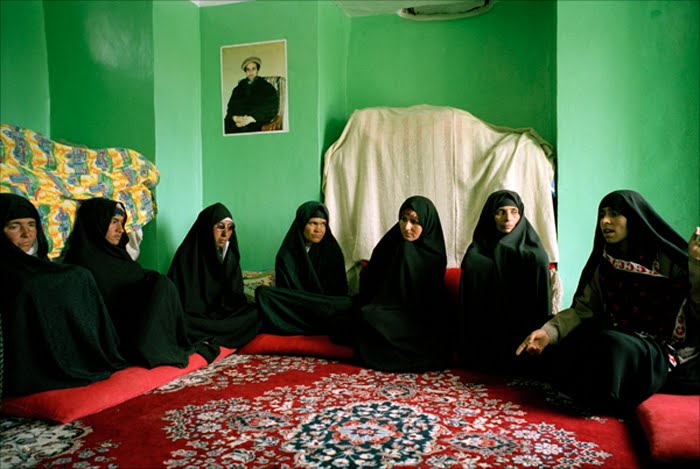
However, this success did not go unrecognised. Conservative forces throughout the country have maintained a consistent opposition to any progression of female liberty. The intensity of this protest has increased in the years since the invasion to the extent that some now claim that they fared better under the Taliban. Whilst oppression was institutionalised under the Taliban, this has now been accompanied by random brutality. Traditional punishments of shootings and stonings for women believed to have acted impiously have been added to by attacks involving poison and acid. These punishments can be delivered for actions so simple as attending school or failing to fully veil. Although female education and more liberal dress codes are now permitted under the law, reactionary opposition within the country have prevented many from benefitting from the reforms. Only 5% of Afghan women attend secondary school and female illiteracy is still as high as 87%.
The most recent culmination of conservative opposition to the new prospects of women’s rights came in late March when the President signed the contentious ‘Shia Family Law’. Although only applicable to the Shi’te population which make up around 15% of the population it is seen as representing a shift in tolerance and equality. The law includes stipulations that women cannot refuse to have sex with their husbands and can only seek work, education or a doctor with their husband’s approval. A protest by 300 women against the new law met with violent resistance from both men and women who spat and threw stones until the protestors had to be rescued by police. Although the UN and Human Rights groups have openly condemned the motion by the Afghan government, many have responded that it is an ‘internal affair.’
The awareness of many within Afghanistan, both male and female, about women’s rights generally appears very low. In an interview at Kabul University most were unaware of the existence of the Shia Family Law. Many consider women’s rights to be bound within religion rather than as a cultural condition which can be changed. Attempts to reform restrictions on freedoms and liberties are naturally seen as a challenge to Islam, and one originating from the largely Christian nations of the West. Governments are often criticised for putting pressure on countries to alter decisions which they have made through a democratic process. Instead it may be the role of Charities and other organisations to educate and build change from a grassroots level.
Subscribe to:
Posts (Atom)